
How to become an insolvency practitioner in Australia

The ‘new’ process of selecting by interview who should be an insolvency practitioner (IP) was the subject of a presentation by ASIC at the recent AIIP conference,[1] confined to the selection of company liquidators. The process may have been new to ASIC and the corporate practitioners, but it in fact goes back several decades for […]
Bankrupt trustees coming before the High Court
While the focus of the High Court’s trust law decision in Carter Holt[1] is in the context of corporate insolvency, many of the principles applied came from the law of bankruptcy. As the High Court pointed out, property held on trust by a bankrupt is specifically excluded as divisible property, under s 116(2) Bankruptcy Act; […]
Delayed payment of a receiver’s bill – by 400 days?

Delayed payment of bills is said to be a significant problem facing small to medium enterprises in particular, with ‘cash flow’ remaining as an essential factor in the underlying stability and success of the business. When courts are the reason for delays in respect of the approval and payment of bills of receivers and other […]
Some views on ASIC v Wily & Hurst
The views of Justice Brereton of the NSW Supreme Court have not prevailed following the decision by the High Court in the Carter Holt Harvey decision, but his findings in dismissing ASIC’s application for a court inquiry into the conduct of two liquidators going back to 2009, and for their registrations as liquidators to be […]
‘Your place or mine, and for how long?’ – a lack of judicial independence

We might have noticed that courts in Australia and indeed in most comparable countries are usually housed in their own buildings, one reason being the need to keep the administration of justice separate and independent from any commercial or government environment and arrangements – both in reality and in perception. The decisions of trial and […]
Insolvency of trading trusts – Keay comments
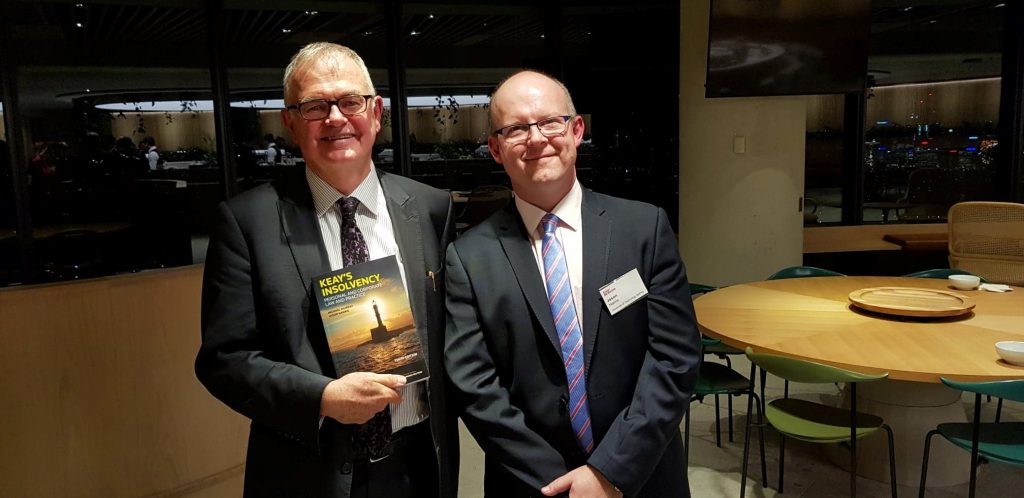
Our 10th edition of Keay’s Insolvency was published in 2018 just after the Victorian Court of Appeal decision in Amerind, and that decision was included in our detailed analysis of the issues involved. We explain the High Court appeal decision, with more commentary to be issued in forthcoming draft updates to Keay. The High Court […]
Revised insolvency standard for practitioners. As to their professional bodies …
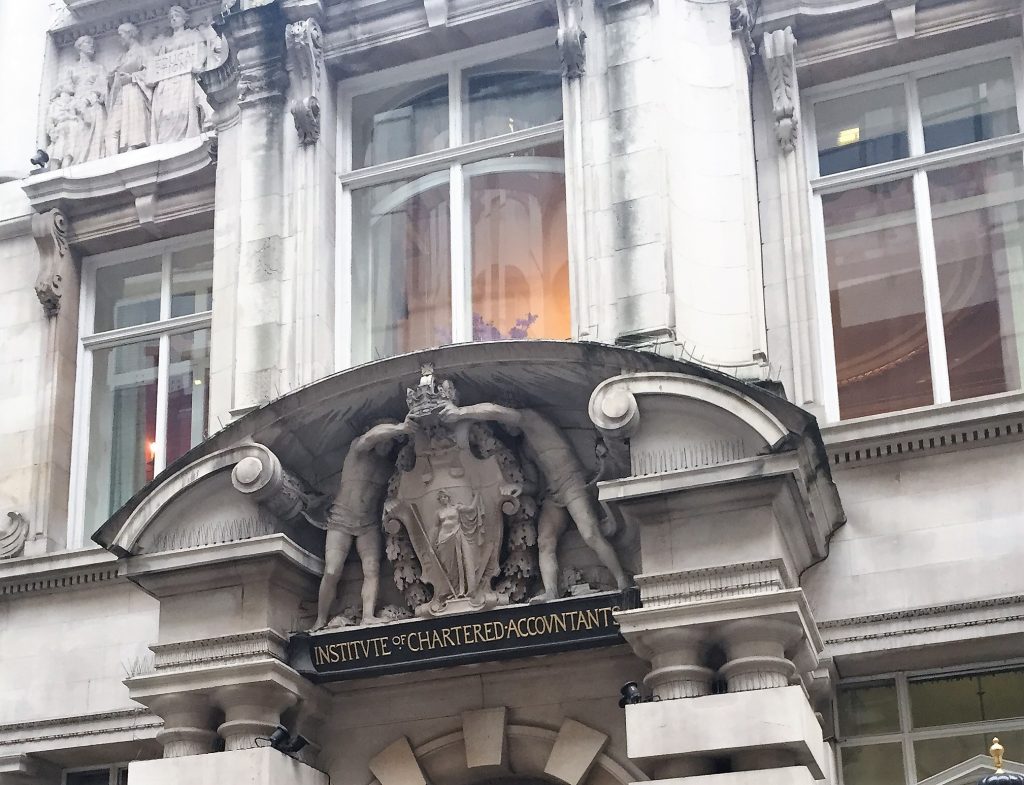
The Accounting Ethical and Professional Standards Board (APESB) has approved a new and revised APES 330 – Insolvency Services, the first revision since 2014. This standard must be complied with by accountant members of CAANZ, CPA and IPA who provide insolvency services. It covers practitioner issues of independence, remuneration, inducements and so on. It does […]
AFCA’s interaction with insolvency law

The authority of the new Australian Financial Complaints Authority (AFCA) and its impact on finance debts owing should be understood, including by those in the insolvency field. That authority has now been extended to what are termed ‘legacy complaints’, about claimed misconduct dating back to 1 January 2008. AFCA’s view of its interaction with corporate […]
Insolvency returns to creditors and other fictions
Insolvencies average dividend returns to unsecured creditors of under 5 cents in the dollar, in some cases, under 1 cent. For your unpaid debt of $10,000, you may receive $100, some months or years later. Much of insolvency is based on fiction. I’d like to think that those in my field are familiar with […]
The Alternative Financial Review

Property prices Perth ‘as good as it’s likely to get’ for rental affordability With little new housing stock – especially at the lower end – the WA capital is in for a time of surging rents when the market picks up. ‘Confidence is sadly returning to the market’ Buying activity is stirring again in the […]
A bankrupt’s list of ‘personal’ assets
The law requires those people in bankruptcy to record their assets and liabilities in a ‘statement of affairs’. It is an important document because the trustee needs to know what assets are available that can be sold to try to pay back creditors. Most ‘personal’ assets are protected, and for many people that is […]
Some concession for small business bankruptcy under severe NSW law

NSW law can remove a person’s right to practice their job for up to 6 years, in the person has gone bankrupt, well beyond what is the present 3 year period of bankruptcy. A real estate agent had his licence cancelled until 2024 by the Commissioner of Fair Trading, in relation to the agent’s 2018 […]
Insolvency Law Bulletin

The latest Insolvency Law Bulletin will be out shortly, covering a range of current cases and issues in both personal and corporate insolvency. The ‘reviewing liquidator’ was a novel introduction into the law, one of many introduced by the Insolvency Law Reform Act 2016. We look at this in the context of remuneration reviews, noting […]
A running account of insolvency history – the lawyers and the accountants

In an account of the interaction between lawyers and the newly titled accountants in 19th century England, it has been explained that while accountants were listed among those being able to conduct the administration of estates under the 1831 Bankruptcy Act, lawyers were not included.[1] The account continues: “The absence from this list can be […]
ASIC’s “significant element of vexation”
ASIC has failed in an application to have an inquiry conducted into joint liquidators’ conduct – Hurst and Wily – in respect of companies that went into liquidation in 2009, with the last of them being deregistered in 2011. The liquidators had parted company in 2012, Hurst continuing in another practice without complaint and Wily […]
Unclaimed bankruptcy moneys – new law
Easier processes to recover unclaimed moneys in bankruptcy commence at the end of June 2019. The Official Receiver in Bankruptcy will be able to decide upon such claims, in the same way that ASIC has done for some years. See Unclaimed moneys. A right of review to the Court will be provided. The law at […]
Insolvency and climate change and environmental liabilities
INSOL Academics in Singapore on 1-2 April 2019 and the following day’s meeting of academics at the National University of Singapore provided a number of thought-provoking presentations, which then serve to prompt connections with local Australian issues. Here is one series of connections. Climate change Climate change came up in the insolvency context, as to […]
The Listing of The Halcyon Isle

This concerns maritime liens and the law by which they should be determined when the ship is arrested in Australia. A significant court appeal was heard on 25 February 2016 and a decision is reserved. This article explains. The Listing of The Halcyon Isle – on a Maritime Lien
Remuneration of liquidators – Sakr Nominees – 1 November hearing
Criticism of inconsistency in judicial decision making in determining the amount liquidators should be paid for the work they do is the subject of the following article, by Michael Murray Any insolvency practitioner appointed as trustee or liquidator to an estate or administration is entitled under the Bankruptcy Act or the Corporations Act to remuneration for work […]
Our insolvency law reform – will it all end in tears?

While Australia has been debating for too long what law we should have to assist in the recovery of distressed businesses, both the UK and Europe are considering more advanced reforms consistent with a stated policy of encouraging, by law or otherwise, better corporate restructuring outcomes. A failing business that simply collapses into liquidation and winding up invariably loses much […]
Launch of Keay’s Insolvency 9th ed, and a call for law reform
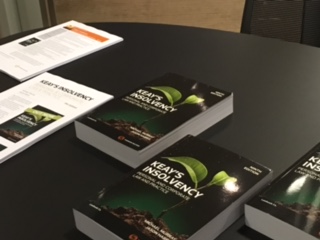
A call for a major overhaul of our insolvency laws was made by Michael Murray and Associate Professor Jason Harris at recent launch of the 2106 edition of their book, Keay’s Insolvency, before an elite audience of judges, academics, lawyers and insolvency practitioners. The launch was appropriately hosted by the prominent insolvency firm, Ferrier Hodgson. […]
Insolvency Law Reform – we needed a racehorse and we got a camel

In introducing new insolvency reforms – what will be the Insolvency Law Reform Act 2016 – the government has claimed that “probably 95 per cent—or even 99 per cent—of liquidators” comply with their legal obligations in administering Australia’s insolvency regime: Senator J Williams, Second Reading. On the other hand, figures show that those involved in […]
Government progress (or lack of it) on insolvency law reform
‘Progress’ on Insolvency Law Reform by Michael Murray See my recent comments at this link. Some will be aware that various law reform proposals for our insolvency laws have been made over time. These proposals exist either as a result of reports commissioned by and given to government. Other such inquiries are in train. There […]
PRC Shipbuilding Disputes in London Arbitration: The Threat of Parallel Proceedings in China and the Consequences and Possible Alternatives

This article by Peter Murray and Lin Jiang examines the legal system in China and how on the one hand it is seen as biased in favour of local parties and on the other hand it is seen as no more than a tool of the state. Recent cases in the maritime courts in China […]