
‘A good idea’ – assignment of a liquidator’s recovery rights

A liquidator has transferred, with court approval, potential recovery claims to the ATO, as the major and only creditor in a liquidation. The law concerning assignment of claims is however said to remain uncertain despite changes made to facilitate such transfers. In the case in hand, the ATO is owed $5.4m. The company – Anatax […]
ASIC’s deterrence message – “no point just communicating this into the Fin Review”.

ASIC gave some useful insights before the recent Senate oversight hearing[1] on 13 September as to the reality of the effectiveness of its proposed and current enforcement measures, in particular by way of litigation as one means of promoting deterrence. Whether the recent increases in corporate sanctions will help is perhaps another matter. As was […]
Use of referees in insolvency litigation

Justice Michael Lee of the Federal Court of Australia has called for a more proactive response from liquidators and trustees and their lawyers in pursuing insolvency litigation with a view to limiting the costs involved. He suggests more use be made of referees as one way of achieving this.[1] This is a part of a […]
ASIC’s period of external scrutiny

The Australian Securities and Investments Commission is properly subject to parliamentary oversight, apart from the on-going scrutiny it receives from its various stakeholders. At least four items of parliamentary oversight are coming up in the next month or so. 13 September – the PJC on Corporations and Financial Services is conducting its regular “oversight of […]
Climate change and the law

Here are details of two recent events on climate change and the law, followed by details of a range of other issues covered by Murrays Legal associated with the environment, climate and insolvency case law and policy. A “hypothetical” on Climate Change: the Science and the Law Climate change and the law came in for […]
Regulation of Australian insolvency practitioners – UK and NZ compared

I am pleased to be soon presenting to various groups on the regulation of Australian insolvency practitioners, with some comparisons with England and New Zealand. Co-incidentally, international IP regulators are gathering this month for their annual meeting. Given the unique nature of the role of an IP, regulation does call for a particular and more […]
International Association of Insolvency Regulators’ Conference – 2019

Australia is attending and presenting at the annual insolvency regulators’ conference, along with regulators from the UK, the US, New Zealand, Singapore and others. The International Association of Insolvency Regulators (IAIR) is having its annual conference from 16-19 September 2019 in Belfast, Ireland. IAIR is an international body that says it “brings together the […]
A liquidator found liable for breach of confidence and invasion of privacy

“To say there is bad blood between David Henderson and Robert Walker is an understatement. From the time Robert Walker was appointed liquidator of Property Ventures Ltd (PVL) on 27 July 2010, he has been on a collision course with David Henderson, former director of companies in the PVL group. Frustrated by PVL’s liquidation being […]
A legal ‘affront’ – the Chorley exception – has gone
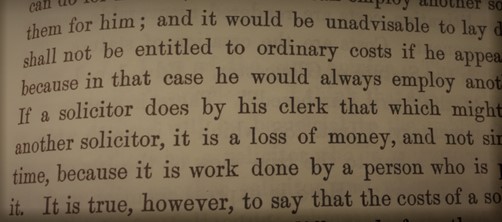
In raising the fundamental equality of all before the law in the context of a lawyer’s costs in their own court proceedings, the High Court perhaps went a little too far. But an old rule in favour of lawyers’ costs has now been abolished, without, we are assured, impacting other more valid exceptions in the […]
Accountants’ insolvency code updated

A new standard for insolvency practitioners – APES 330 – has just been issued written in APESB’s unique style and offering guidance on issues in insolvency practice not covered – to some extent – by the law: responsibilities to creditors and others, timeliness, remuneration, meetings, and integrity and fairness. The new version is said to […]
Democracy, Human Rights and the Judiciary: the common law and the wider world

The Australian Academy of Law is hosting a presentation by Sir Nicholas Blake on this Wednesday 4 September 2019, in Melbourne. Sir Nicholas is a former High Court Judge of England and Wales and the first President of the then newly created Immigration and Asylum Chamber of the United Kingdom Upper Tribunal from 2010 until […]
ASIC’s Corporate Plan 2019-2023 – Insolvency Practitioners

ASIC’s corporate plan 2019-2023 contains much detail about the various sectors it regulates and what regulatory approaches it is taking. This is a list of what ASIC says are its ‘continuing actions’ in relation to corporate insolvency with ASIC’s stated particular focus of each action under the plan. This is for the information of corporate […]
Winding up a company for $2,000?

A court has suggested that the minimum debt amount for which a creditor can proceed to apply to wind up a debtor before the court be increased from the present $2,000, an amount which “has remained frozen at this level for more than a quarter of a century”. And when courts make law reform suggestions, […]
Insolvency practitioner offence reporting – a need for reform

If liquidators in Australia are investigating and reporting to ASIC “thousands” of breaches of the law by those involved in insolvent companies each year, most of which are unactioned, something has to change. Consistency? A major company that has been found guilty of cartel misconduct, or sale of unsafe goods, or serious tax evasion should […]
ARITA’s 8 (plus?) point plan for insolvency law reform

One of the main insolvency professional bodies in Australia – ARITA[1] – has released what it calls its “8 point plan” to comprehensively review and reform Australia’s insolvency laws to ensure they are ‘simple, efficient and effective’. ARITA proposes a ‘Financial Recovery Law Reform Commission’ to be led by ‘eminent commissioners’ with a view to […]
A policy question with insolvency preferences

Is the essence of a preference payment in insolvency that the pool of the debtor’s assets are lessened by the debtor’s payment to the preferred creditor, such that other creditors will receive less? Or is it enough that the preferred creditor simply obtains more that it would have received from the payment than if it […]
Flying low – an airline’s ‘extraordinary’ response to a $19m penalty

A major international airline turned up to court to seek a stay of a A$19m penalty with evidence so inadequate that the Judge described it as “extraordinary” for a significant state-owned entity in an “extremely serious” situation. Following 9 years of litigation and a 6 month trial, a A$19 million penalty was imposed on Garuda […]
International insolvency law and Australia’s UNCCA
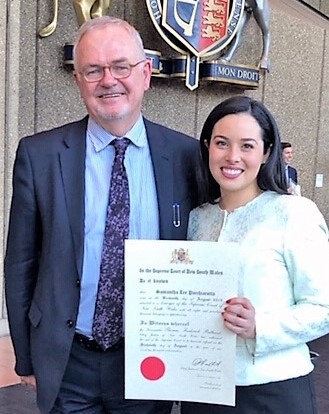
A newly qualified Australian lawyer who was sponsored through UNCCA and LAWASIA to attend Insolvency Working Group V in Vienna in December 2018, is pursuing further research in international law in the Netherlands. I was very pleased to have been invited to the admission as an Australian lawyer of my colleague Samantha Pacchiarotta in the […]
Views of former High Court judges, on reasoned [sic] government decision making

Here are two rather politically telling comments of former Australian High Court judges from which we may each make our own assessment about how this lucky country is governed, and by whom. Mr Kenneth Hayne – “Trust in all sorts of institutions, governmental and private, has been damaged or destroyed”; and Mr Ian Callinan – […]
NSW Law Society’s Specialist Accreditation Conference 2019

I am presenting to senior lawyers at the NSW Law Society’s Specialist Accreditation Conference 2019 on 9-10 August, in the Business Law component. The topic is, simply, current issues in personal and corporate insolvency. The focus and content is different when the audience comprises lawyers, rather than insolvency practitioners (IPs). Lawyers have a range of […]
Choosing courts in cross-border insolvency applications

As a federation, Australia has a mix of state and territory and federal courts, each with their own jurisdictions. Jurisdiction is however shared between courts in corporations matters, including those concerning the insolvency of companies under Ch 5 of the Australian Corporations Act 2001. Litigants have a choice of the Federal Court or the State […]
Australian insolvency law – current reforms

As in many countries, general elections put law changes and reform on hold pending the new government’s decisions on pending law. The government was returned in Australia at the recent May election and this is a convenient time to review where Australian insolvency law reform is at the moment, or as much can be anticipated. […]
“Shortcomings of the Model Law on Cross-Border Insolvency (just some)”

Professor Martin Davies of Tulane Maritime Law Center recently offered a critique of the Model Law on Cross Border Insolvency at a presentation at Sydney University Law School. As he said: “shortcomings of the Model Law (just some)”. Limitation on recognition of foreign judgments An early problem with the Model Law on Cross-Border Insolvency was […]
NZ’s 2019 Insolvency Practitioners Regulation Act and its cross-Tasman impact

NZ’s Insolvency Practitioners Regulation Act is due to commence over the next year introducing a licensing and regulatory regime for insolvency practitioners (IPs) under a co-regulatory arrangement similar to that introduced in the UK in 1986. While many relevant details are yet to be developed, some initial thoughts are offered in relation to Australian IPs […]