
Major corporate collapses and the public interest – British Steel and more

The collapses in the UK of socially and economically important enterprises – British Steel, Carillion Constructions and Thomas Cook are current examples – raise many public interest issues that are managed by the joint conduct of the liquidations by the government Official Receiver and private insolvency firms. The insolvency of a business raises broader issues […]
MYEFO 2019-20 – ASIC, phoenixing and ‘journalists’

The government’s mid-year economic and fiscal outlook 2019-20 has these interesting items about access to ASIC’s registers, unlawful phoenixing and director identity numbers. Phoenixing The government says it will provide $58.9 million over four years to the ATO and $4.7 million over four years to ASIC to continue the government’s efforts to counter illegal phoenixing. […]
Insolvency – some root and branch ideas

Does the government shirk its responsibilities in ensuring the proper operation of our insolvency regime by unloading the costs of investigation, reporting and prosecuting as a tax on the private market, including the creditors? thereby distancing itself from the constant criticism of the conduct of the insolvency system? If we want to do a […]
Halifax – a cross-border insolvency

A joint hearing of Australian and New Zealand courts is one way to deal with an intermingled cross-Tasman insolvency, through a letter of request process, but other options might have been available through the Model Law. “Classic candidate for cross-border cooperation” On 22 August 2019, the Federal Court decided in principle that it could send […]
Review of the CATSI Act 2006

The government has announced a review of the Corporations (Aboriginal and Torres Strait Islander) Act 2006 (CATSI Act) which is the law that provides for a special form of incorporation for Aboriginal and Torres Strait Islander organisations, separate from Corporations Act companies. Current problems in insolvency under the Corporations Act – trading trusts, employee priorities, […]
The Future of Australian Law Reform – the five top priorites?

The Australian Law Reform Commission released its report The Future of Law Reform: A Suggested Program of Work 2020-25 on 2 December 2019. The report contains what the ALRC says is an ambitious agenda for law reform over the next five years which it is proposing to government. It follows an extensive community consultation on what […]
Anti-competitive conduct in the insolvency industry?

A new code of conduct for insolvency practitioners in Australia now proscribes illegal anti-competitive conduct, unusual for an industry code but no doubt included for good legal reasons, given the last competition review of insolvency was in 1992. Professionals can have the knowledge and authority to significantly influence, often in their favour, the framing of […]
Liquidator’s fees were too low

Adverse findings have been made against a liquidator by a disciplinary committee, one being that he accepted fees that were “significantly below the actual cost” of the liquidations concerned, and, that being the case, he gave less attention to the investigation of those matters than he should have.[1] That raises an interesting issue about what […]
Insolvency Law Bulletin – penalties, phoenix & preferences, franchises & offence reports
The latest issue of the Insolvency Law Bulletin (2019) 20(4&5) covers some very topical issues. The Halifax Investment Services matter is next in the Federal Court on 13 December. The prospect of a joint Federal Court – New Zealand High Court hearing is on the cards. In Classic cross-border cooperation: joint court hearings in the […]
Australia’s Official Receiver (in corporate insolvency)

Australia adopted much of English corporate law at the beginning of the 20th century but one thing it did not take on was the English Official Receiver role[1] – the UK’s default liquidator and trustee in bankruptcy, among other tasks, also adopted in New Zealand as the Official Assignee. Official liquidators Instead, Australia opted for […]
Breaking a bankruptcy monopoly in New Zealand

There are moves in NZ to break the monopoly of the Official Assignee in personal insolvency by allowing private insolvency practitioners to administer bankruptcies under the same structure as applies in Australia. A private member’s bill – the Insolvency (Private Administration of Personal Bankruptcy) Amendment Bill – would amend the Insolvency Act 2006 to allow this. […]
New Zealand – corporate insolvency practitioner regulation

The New Zealand government has called for submissions on the proposed minimum standards and conditions for the licensing of insolvency practitioners under the Insolvency Practitioners Regulation Act 2019, including Australian practitioners. The Discussion Paper sets out a number of issues, some of which, by way of comparison with Australia, are these. The Act has introduced […]
Corporate phoenixing – a crime?

The Australian Law Reform Commission has released a Discussion Paper addressing a number of aspects of its reference on corporate criminal liability. Phoenix activity receives attention. Other issues are the division between criminal offences and civil penalty provisions; the method for attributing criminal liability to corporations; individual liability for corporate offences; deferred prosecution agreements; and […]
New Zealand insolvency reform – half a gift card

The New Zealand government has decided to give consumers with unclaimed gift cards issued by a failed business a priority in the winding up of the business; the consumers are otherwise just unsecured creditors. But there are to be limits. Insolvency practitioners will be required to honour at least 50 percent of the value of […]
Cross-border insolvency – the Canberra session
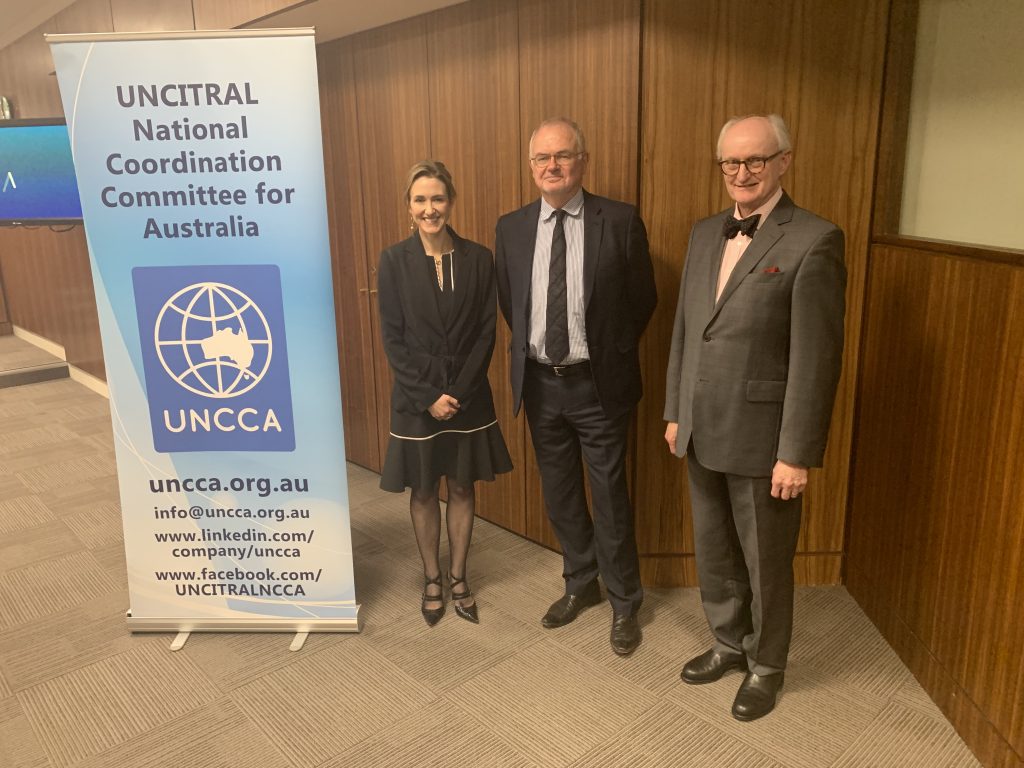
I was pleased to have been involved with others in giving a presentation on UN Day 24 October 2019 to commemorate 25 years of cross-border insolvency reform from UNCITRAL. My session in Canberra was chaired by the Hon Dr Warwick Neville, of the Federal Circuit Court of Australia, with commentary from Ms Prue Bindon, of […]
Insolvency developments in the 2018-19 annual reports – ASIC, AFSA, AGD and ATO

Annual reports nowadays are more marketing publications as to various achievements of the relevant agencies and their compliance with statutory and financial reporting requirements. The reports must be laid before each house of the Parliament on or before 21 October 2019. All Commonwealth reports are collected at this link. ASIC for one is required by […]
Fair Entitlements Guarantee – powers to demand information

The Department of Employment, Skills, Small and Family Business’ Annual Report 2018-2019 provides some information about the Fair Entitlements Guarantee Recovery Program which is now administered by the Attorney-General’s Department, and about a 2019 court decision in 1st Fleet. Fair Entitlements Guarantee Recovery Program The annual report explains that since it began on 1 July […]
A bankrupt and ‘one rooster, one peacock, three ducks, and 22 chickens …’

A person’s bankruptcy can arise from a host of circumstances, disputes with neighbours and non-compliance with local council requirements being a significant one. The 2012 bankruptcy of Maria Fokas arose from her allegedly and unlawfully keeping on her Kogarah property ‘one rooster, one peacock, three ducks, and 22 chickens when no more than 5 chickens could […]
Small business insolvency – the Ombudsman inquiry

The Australian Small Business and Family Enterprise Ombudsman has established an inquiry into “the insolvency system” to report by February 2020, focusing on practitioners, lawyers, financiers and others. It is interesting that this government inquiry is not looking at the responsibility of government itself in maintaining the insolvency system. This commentary is based upon my account […]
Do old emails ever die?

A respondent car hire company being sued by the ACCC for unconscionable conduct has claimed that what the ACCC alleges were its intimidating and threatening emails sent to its customers have been deleted and cannot be retrieved. The Judge was not convinced. Judicial notice After hearing expert evidence as to the nature of emails and […]
A trustee’s interest in a bankrupt’s interest in trust property – Boensch v Pascoe

A seven member bench of the High Court was convened for the hearing in Boensch v Pascoe on 11 October 2019. It is an appeal from a Full Federal Court decision to the effect that a trustee in bankruptcy had a right to lodge a caveat over real property of the bankrupt held by him […]
The evolution of bankruptcy and insolvency laws and the case of the deed of company arrangement

This is a thoughtful and instructive article on the process of the historical development of the bankruptcy and insolvency laws in the United Kingdom, the United States and Australia. Its central point, as the abstract explains: “is to demonstrate that the process has been one of progressive liberalisation of consequences accompanied either by increased regulation […]
NZ insolvency practitioner costs recovery fees

The New Zealand government has released a discussion paper on proposed regulations concerning fees and other arrangements in preparation for the commencement of the co-regulatory scheme for insolvency practitioners in June 2020. Excluding the accredited bodies’ fees, proposed government fees payable by each insolvency practitioner are a new registration fee of $170, and an annual […]
Digital disruption is here but “progress towards a digital insolvency practice has to date been slow”

A recent journal article on the impact of artificial intelligence and its use by the insolvency profession has good and bad news – the good being as to the great potential for the use of AI in insolvency practice, the bad being the limited view of those benefits held by the profession. The article** is […]