
Australia’s inconsistent tax and insolvency laws

Recent research has revealed that although the Australian Taxation Office (ATO) lost its priority in insolvencies in 1993, and was relegated to a pari passu standing along with other creditors, it has gradually regained that priority in other ad hoc ways with little coherent policy. A redrafting of s 555 of the Corporations Act, which […]
The proportion of insolvency practitioners who are women

Around the time of International Women’s Day and more generally there is often discussion about the low proportion of women registered as liquidators or trustees in Australia – under 10%. Any assessment of why that is the case needs input from other disciplines depending on the depth of inquiry but an analysis at a professional […]
New UK Insolvency Code of Ethics

A new version of the Insolvency Code of Ethics will apply from 1 May 2020 to all insolvency practitioners in the UK. In its reliance on ‘disclosure and consent’ as a way of managing a conflict, it may differ from code guidance in Australia. ————- It follows a 2017 consultation saying that the Code […]
A regulator’s report on insolvency practitioner remuneration

Australia’s bankruptcy trustees receive an average of $4,800 in administering each estate, with 63% of estates paying no remuneration at all – the government has this work done for free. These figures come from a report of the bankruptcy regulator – Registered Trustee Remuneration in the Personal Insolvency System – Best practice report 2020 – […]
Protected: AFSA’s report on remuneration
There is no excerpt because this is a protected post.
AFSA’s report on insolvency practitioner remuneration

AFSA has produced a report on insolvency practitioner remuneration – Registered Trustee Remuneration in the Personal Insolvency System – Best practice report 2020 – offering standard but useful guidance to on remuneration for work done. Some particular issues in the report call for comment. …. Currently subject to sandpit review. Out soon.
Obligations to whistleblow

Journalists and accountants among others are obliged by NSW law to ‘whistleblow’ – to report to the police – if they know of the commission of serious criminal offences. These and other issues about whistleblowing, including a forthcoming public debate on 25 March, are discussed in this article. A charge of misprision of treason against […]
The proposed reinvigoration of the UK’s business rescue culture through ‘recalibration of the balance of power’ – some steps too far for Australia?

A recent academic article from the UK has reviewed proposed restructuring reforms announced by the government in August 2018, although yet to be implemented. These comprise a minimum 28 day moratorium for the debtor on creditors’ claims, a debtor-in-possession (DIP) arrangement with a monitor role rather than that of an insolvency practitioner (IP), a restructuring […]
Three liquidators for three intertwined companies

A Judge appointed individual liquidators to three separate companies – OT, AGM and Ozifin – rather than a common liquidator for all of them, even though their affairs were complex and intertwined. This necessitated their joint application to the court for permission to share company and individual information between themselves, including ‘personal information’, in order […]
ASIC’s initial claim of illegal phoenix activity by a liquidator now the subject of a 160 page statement of claim

This post is further updated on 26 February 2021 to reflect that ASIC filed its statement of claim against Mr Bettles on 19 February. Orders were then made by the Federal Court on 23 February that included that ASIC must, by 9 March, supply Mr Bettles with a version of the statement of claim which […]
Winding up a foreign company – Blumenthal’s Tipsy Cake

Tipsy Cake was wound up on 12 February 2020, having had provisional liquidators appointed on 20 December 2019, who then became the liquidators. The company carried on a restaurant business under the name “Dinner by Heston Blumenthal”, a well known cook, in the Crown Casino complex in Melbourne. It is a Part 5.7 body under […]
A not so simple fix for franchise insolvency?

The financial collapse of a franchisor can have a severe impact on its franchisees but a “simple fix” proposed to address that impact may not be simple at all. Those academics and policy makers concerned about the business model of franchises, and its lack of legal protection in such cases, often seek to offer protection […]
Disclosure of business tax debts to credit agencies

Law allowing the Australian Taxation Office (ATO) to disclose tax debt information of businesses – corporate and personal, over AU$100,ooo in debt – to registered credit reporting bureaus (CRBs) commenced on 21 February 2020.[1] There is already a similar scheme in New Zealand, with a threshold of NZ$150,000. According to the Australian Explanatory Memorandum ‘this […]
What has happened to the proposed beneficial ownership of shares register?

A review of the ASIC Annual Report 2018 by a parliamentary committee was tabled only in February 2020. The report has a section headed: ‘What has happened to the beneficial ownership of shares register?’ The committee asked ASIC for its view regarding the establishment of a beneficial ownership register, as the report says, ‘to make […]
Cross-border insolvency hearing between Australia and New Zealand

The Federal Court of Australia requested the High Court of New Zealand to help it jointly hear applications on 18 February relating to the pooling of various funds held by the Australian incorporated parent (Halifax AU) and a New Zealand incorporated subsidiary (Halifax NZ). A ‘letter of request’ to that effect was issued by the Federal […]
A review of Australia’s insolvency practitioner regulation system

Given a choice between a good insolvency law and poor practitioners, and good practitioners and a poor insolvency law, the latter is preferred. Australia seems to be working its way towards poverty on both counts, with its insolvency practitioners (IPs) highly and expensively regulated quite at odds with the co-regulatory trends elsewhere. […]
Independence of debtors’ chosen liquidators

If directors apply to the court have their company wound up in insolvency, or in fact support an application for winding up, should there be any predisposition against appointing their nominated liquidator? The decision in Avant Garde Investments[1] suggests yes. Receiver F applied under s 459A of the Corporations Act that the company be wound up […]
Three year ‘imprisonment’ for bankruptcy debt

Australia has historically been seen as severe in its approach to unpaid debt and opposition to changing the 3 year period of time before bankruptcy discharge indicates that this sentiment is still strong; unless there are other agenda$ at play. As an example, the colony of Victoria was one of the last jurisdictions in the […]
Does insolvent trading work? The UK may not think so.

In the context of the review of the safe harbour provisions in Australia, there have been recent articles on insolvent trading – s 588G – itself, from which liability directors may try to seek refuge in their s 588GA safe harbour. Trying to recover money from the directors personally, instead of from the remaining assets […]
A deferred tax debt can remain due and payable

If a company owing a debt enters into an agreed payment arrangement with the creditor, that can serve to defer that debt as being ‘due and payable’ for the purposes of determining the company’s insolvency – that is, whether the company can pay all its debts as when they become due and payable.[1] It depends […]
Don’t be too harsh on non-compliant directors of failed companies?

The laws regulating the conduct of directors of companies in liquidation and laws regulating persons who go bankrupt exist in two different universes, consistent with the relative influence of the stakeholders behind each. Past reform ideas to lessen time and expense in liquidations, and address phoenix activity, were rejected by directors as being ‘unjustifiably harsh’. […]
Million pound fines for breach of insolvency standards
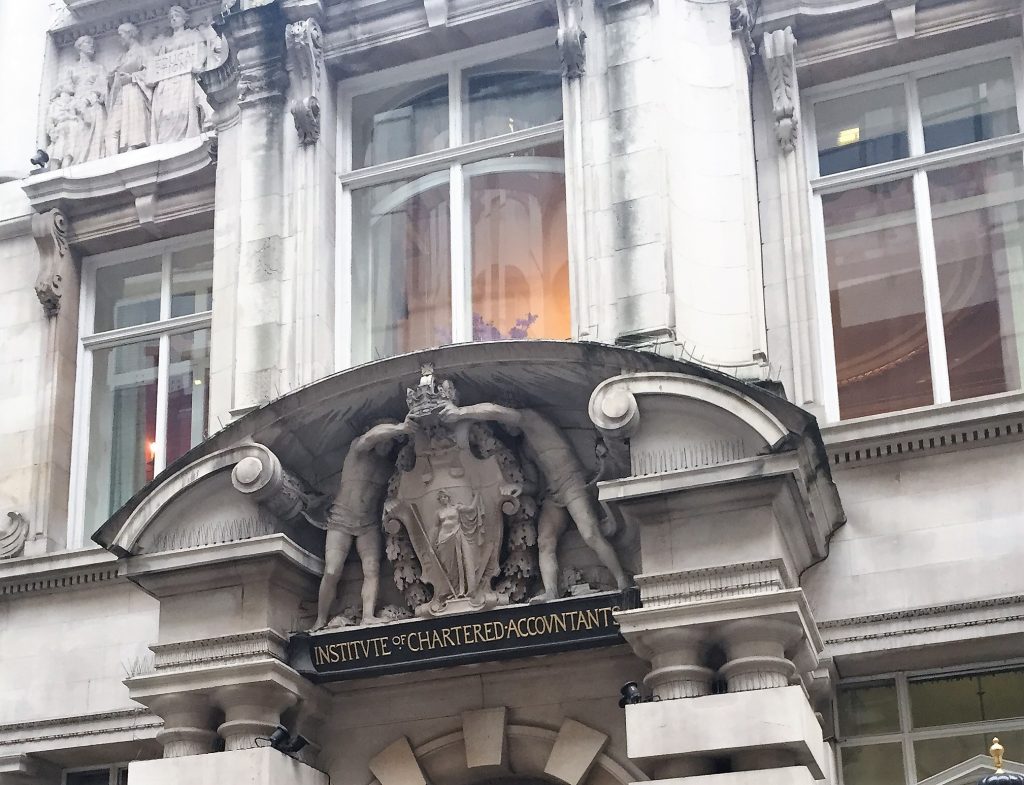
The million pound fining of an insolvency firm and its administrators by the English accounting body ICAEW illustrates the differences between the UK’s insolvency co-regulatory regime, and a similar scheme soon to be adopted in New Zealand, and that of direct regulation in Australia. Comet The fine was issued by consent in relation to the […]
A pointless distinction in corporate insolvency

In the 19th century, where much corporate insolvency law thinking still remains, a distinction was made between court ordered liquidations on the one hand, and creditors’ voluntary liquidations (CVLs), both solvent and insolvent, on the other. An accident of insolvency history, as an early edition of Ford says, though perpetuated for over 100 years. The […]
Review of Australia’s insolvency safe harbour – s 588GA

Australia’s ‘safe harbour’ regime under s 588GA is due for review, since September 2019, as to whether it offers the right balance between creditor compensation and director discretion. Should the review first revisit whether the insolvent trading section – 588G – should be repealed or changed? The focus of the review is to be on […]