
The new Attorney-General and business bankruptcies

As the new Attorney-General, Senator Michaelia Cash[1] will find her portfolio encompasses the current law reform debate about whether and for how long there should be a period of restriction on a person after the date of their bankruptcy, as opposed to after their corporate failure. Senator Amanda Stoker[2] as Assistant Minister to the Attorney-General, […]
Move bankruptcy from the Attorney-General to Treasury?

In light of the Attorney-General’s need to transfer some matters of his responsibility, a worthy area to transfer is the law and policy of personal insolvency, or ‘bankruptcy’ to most. A matter of economics At the moment, corporate insolvency – company liquidations and the like – is handled broadly as a matter of economic policy […]
Neither a borrower nor a lender be – at least to a friend or a relative …

A guarantee given by a mother to a friend of her son for the son’s business debts ended up in court. There are lessons to again be learned from the outcome; and some law reform suggestions to be considered for SME businesses. Although many people operate their small business through a limited liability company, they […]
Appeals from sequestration orders made by registrars – continued

An appeal from a sequestration order made by a registrar in 2016 is being heard, in 2021. In bankruptcy litigation between a Ms Bechara and a Mr Bates various courts have been found to have made errors in the process of dealing with a purported ‘appeal’ by Bechara from a sequestration order made against her […]
Review of the English Insolvency Rules 2016

The 2016 insolvency rules of England and Wales are being reviewed, in accord with a statutory requirement to do so by 2022. A report on the review must be published within five years of 6 April 2017, the date that the Rules came into force. Australia also (tries to) have statutory reviews of its insolvency […]
‘The Vanishing Criminal – Causes of Decline in Australia’s Crime Rate’ – a book review

This is a very interesting and useful book, trying to explain why Australia’s crime rate has fallen in many areas, and continues to do so. That fall is also found in other comparable countries – Canada, New Zealand and more. I attended the launch of the book by its authors – Don Weatherburn and Sara […]
Double suspension as a liquidator and as a trustee

An experienced Australian insolvency practitioner (IP) has had his right to practise as a liquidator suspended by a Court for 3 years following a finding that, in 2010, he had fabricated documents and forged signatures in the context of an ASIC investigation with the intention of misleading ASIC. This has led to his right to […]
Apprehensions of the fair-minded lay observer – a law reform review of judicial impartiality

The Australian Law Reform Commission has been asked to undertake a review of the laws relating to impartiality and bias as they apply to the federal judiciary – the Federal and Family Courts, the Federal Circuit Court and others. The Australian Academy of Law and the ALRC are hosting a seminar concerning this review entitled […]
Should a person be subject to restrictions after an insolvency?

The default period of restriction on a person following their personal insolvency is under consideration in Australia. It prompts the wider question whether there should be a general default period right across insolvency. Generally, only personal insolvency imposes a default period of restrictions as such, for 3 years in Australia, but, given what seems […]
A proposed change of focus of the Australian Official Trustee in Bankruptcy

The Australian Official Trustee in Bankruptcy (OT) has sought comment on a significant refocus of its legal responsibilities by way of proposing new criteria to distribute some of its bankruptcy trustee work to Australia’s 200 private sector registered trustees (RTs). The OT refers to its lack of unlimited resources and its need for its work […]
The directors of Kids Company – “actions of public bodies do not have the effect of dissuading able and experienced individuals from becoming or remaining charity trustees”

A significant English High Court decision has been given refusing to make banning orders against trustees (directors), and the CEO, of a high-profile charity – The Kids Company – that collapsed in August 2015: The Official Receiver v Atkinson & Ors [2021] EWHC 175 (Ch) (12 February 2021). The decision has relevance in Australia, in […]
Australia’s “practical insolvency regime … sometimes more of a rough and ready process and not an exact science … a trade-off …”

The Federal Court has dismissed a challenge to deeds of company arrangement of two property development companies and not put them into liquidation to allow investigations into what their creditor builder – Decon – claimed were “dubious” transactions leading up to the companies’ insolvency. The investigations and report to creditors of the joint administrators were […]
Australian personal insolvency reform for COVID-19 impacted debtors

The Australian government’s proposed retention of the restrictions of bankruptcy on COVID-19 impacted business proprietors and consumers is questionable, but expected. Possible reasons for this range from a protective concern by the government not to allow these bankrupts too much free rein in light of the uncertain economic outlook for 2021, in case they become […]
Liquidator’s registration suspended not cancelled, by agreement

In A liquidator disciplinary decision – some regulatory insights | Murrays Legal Commentary , I reported an AAT decision refusing a liquidator’s application for a stay of a 13 December 2019 discipline committee decision to cancel his registration but granting a stay of the publication of the committee’s reasons for decision. That was nearly a […]
New Zealand and Australian voluntary administration law

New Zealand adopted Australia’s Part 5.3A voluntary administration regime some years ago, in Part 15A of its Companies Act 1993. The NZ High Court has recently noted the relevance of Australian law in interpreting its voluntary administration provisions. In Meltzer v Amstar New Zealand Limited [2020] NZHC 3510, administrators sought directions under section 239ADR of […]
‘Modernising’ insolvency communications

The Australian government’s consultation paper – Modernising Business Communications – Improving the Technology Neutrality[1] of Treasury Portfolio Laws, of December 2020 – offers, as an example of what it is about, the new “package of reforms to streamline insolvency procedures”, allowing “businesses to use technology to conduct meetings relating to the external administration of a […]
Australian root and branch bankruptcy reform – creditors’ rights? Elizabeth (Ist) laws? SMEs? …

While COVID-19 restrictions on creditors in bankruptcy have ended, though now with an increased $10,000 threshold, the experience should prompt one of many root and branch (R&B) issues that exist in Australian insolvency law. Those who call for such a review should be prepared to actually do so, unconstrained by self-interest and what can be […]
Australia’s new liquidator registration processes, and its ‘new liquidators’

On 30 December 2020, ASIC issued guidance on the new liquidator registration processes that apply in Australia two days hence – from 1 January 2021 – see Important changes to applying for and maintaining registration as a liquidator from 1 January 2021. This guidance explains the key changes enacted by the Corporations Amendment (Corporate Insolvency […]
Bad bankruptcy notices

A bankruptcy notice was found to have been wrongly issued by the Official Receiver because it did not attach a final judgment or order of a court, merely a costs assessor’s certificate: Thomas v Raftopoulos [2020] FCCA 3515. According to AFSA’s explanation of the law in Official Receiver Practice Statement 6 – Applying for a […]
The Law of Bankruptcy Notices and Creditors’ Petitions, by Nicholas J Simpson, 2020 – a book review
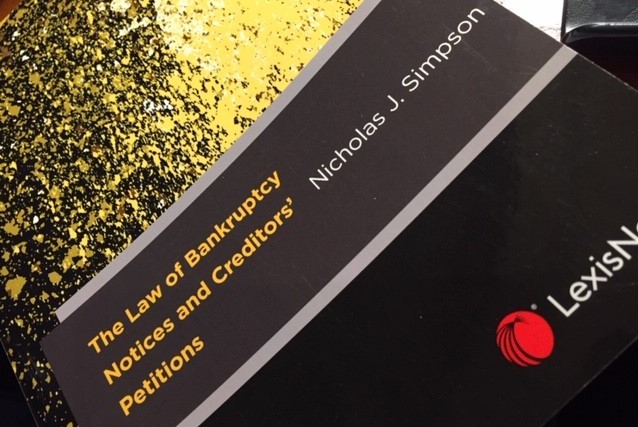
This is a very good and topical Australian text, adequately and accurately described by its title. My review of it was/is to appear in the expected December issue of the Insolvency Law Bulletin, but publication of that issue is delayed until 2021. So I publish my review here, in 2020. As some Judges have more […]
The financial viability of personal insolvency practice in Australia

The Australian bankruptcy regulator – AFSA – has been making inquiries about the financial health of bankruptcy trustee firms during what AFSA terms ‘the challenges presented by COVID-19’. Those challenges have been exacerbated by the protective legislative responses to COVID-19 but the reality is that bankruptcies were falling in numbers the years up to […]
Reinventing Bankruptcy Law – Virginia Torrie
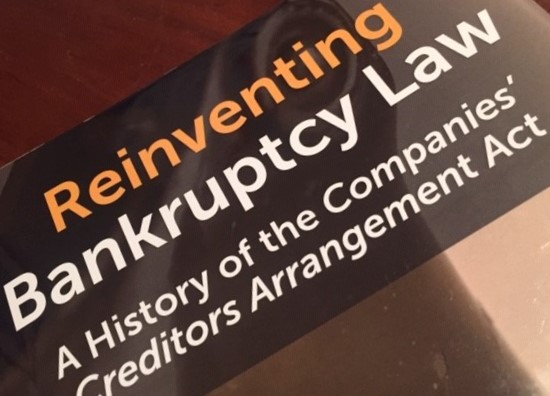
This is a very good book on Canadian insolvency law, sadly with no equivalent in Australia, as I explain below. My review of it was/is to appear in the expected December issue of the Insolvency Law Bulletin, but publication of that issue is delayed until 2021. So I publish my review here, in 2020. Reinventing […]
Australia’s litigation funding market a ‘global hotspot for international investors … many based in tax havens and with dubious corporate histories’ with returns of ‘more than 500%’

The tone and findings of this 454 page report by the Parliamentary Joint Committee on Corporations and Financial Services – Litigation funding and the regulation of the class action industry – are revealed in its opening paragraphs, that the purpose of a civil justice system is to ensure a fair and reasonable society, and that when […]
The ‘powerhouse’ of small and medium enterprises and their recovery ‘boosted’ by our new insolvency laws
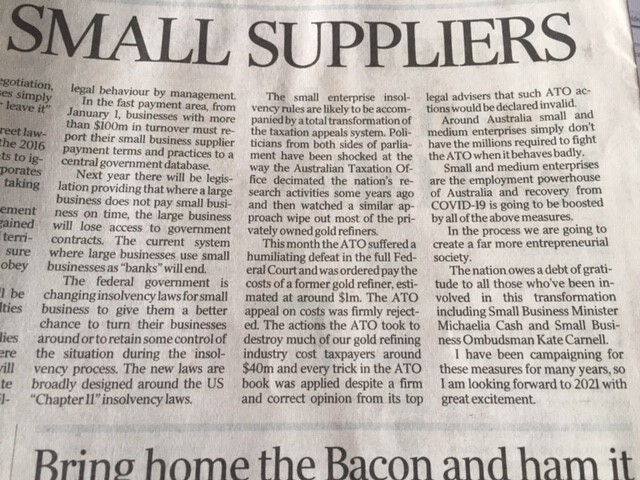
Interesting to know from what [limited] bases journalists get their views … ‘Finally, a fair go for small suppliers’, R Gottliebsen, The Weekend Australian, 19-20 December 2020, p 32