
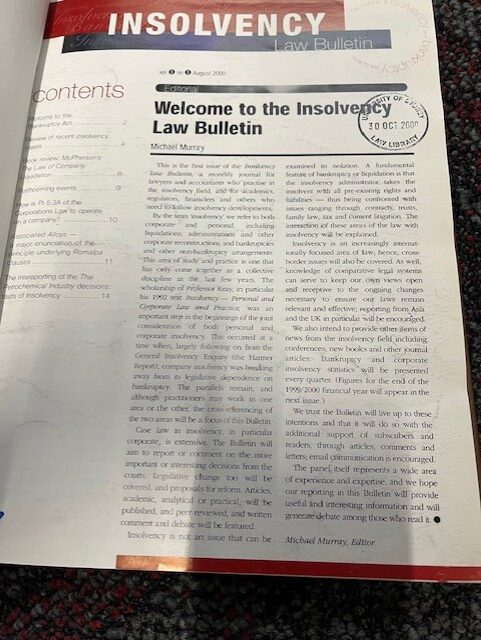
Twenty-five years ago, in August 2000,[1] I launched the Insolvency Law Bulletin through Oliver Freeman’s Prospect Media,[2] supported by an eminent editorial panel, joining a number of Freeman’s other legal bulletins. Not long thereafter, he and his publications were bought out by Lexis Nexis.
Current quality comment
My aim for the bulletin was to provide quality comment and articles in a more immediate way than the formal publication through peer reviewed journals. The advantage of the Bulletin was that cases, law reform and other developments could be the subject of more immediate comment, even if not in the huge detail of a peer reviewed article. For example, Bulletin articles on the 2021 Part 5.3B regime have appeared early on in the law’s life, and case reports of important decisions have issued promptly.
Articles for the Bulletin are not formally peer reviewed in the way of many academic journals but with myself, and subsequent editors, and an eminent panel there was a high standard maintained of publication.
Over time the Bulletin has reported on a wide range of issues, too many to list – case law, legal analysis, statistics, book reviews, cross-border and international, reports from ASIC and AFSA, and humour.
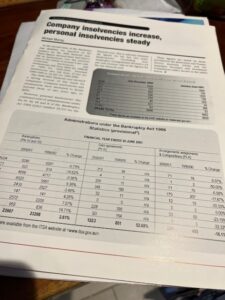
Themes of romance, humour and the like
As to humour, authors often competed with their humorous titles – “to ‘477(2B) or not to be?”, and “lien and mean” and “particularly particular particulars” and “nobody expects the reviewing liquidator!”.
I also tried to introduce some light features. Early on, in October 2000, I asked the late Justice Peter Heerey of the Federal Court, who published his own legal doggerel, whether he would offer some for the Bulletin. He replied agreeing with me that
“bankruptcy is not a fertile field for themes of romance, humour and the like” and that lines such as “CASAC’s proposals for liabilities of corporate groups in insolvency” do not scan particularly well,
But if he were to think of some contribution, he would.
Law covered
I won’t try to describe the particular personal and corporate insolvency law issues covered save to mention tax, environmental, employees, voting rights, independence, remuneration, creditor rights, family law, and the regulators. Suffice to say one can track older law reform and significant cases – David Grant, Sons of Gwalia and Chicago Boot, and collapses – Lehman Bros and One.Tel – by virtue of articles that appeared in the bulletin.
Senate inquiry of 2010
In particular much coverage was given to the law leading up to the Senate Committee inquiry into corporate insolvency regulation and its 2010 report. The name Ariff appeared frequently, and the Committee’s report led to the changes made by the Insolvency Law Reform Act 2016, though not the Committee’s recommendation for regulatory “flying squads”.
A particular issue pursued by the media was to ensure that creditors could vote to remove a liquidator, rather than go to court. That and other such reforms merely involved corporate insolvency catching up with personal, which it is still trying to do.
The 2010 Senate inquiry was a rather torrid time for the industry in the media.
Organised crime was “voraciously exploiting weak regulation” and if reform were not to happen soon “the industry will spiral out of control”.
Such silly media campaigns allowed me to respond in the Bulletin with whatever talent I have for humour, though it was sometimes stirred by my serious articles.** There is no comparison with the measured and thoughtful 2023 PJC Report into corporate insolvency.
Editors and panel members
After me, the Bulletin went through several editors and panel members, here and overseas, including a long-term US member. Their photos in the early issues of the Bulletin show they have changed little over time. 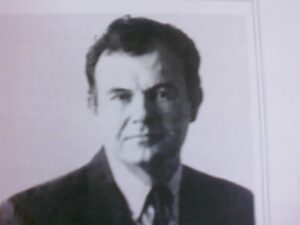
Perhaps because of the “Law” name, we had few insolvency practitioners on the panel, writing and explaining their work not being one of their interests, or perhaps talents.
Words and wish lists
I had an ‘Insolvent Words’ item each issue, quoting some interesting or quirky comment.
“What if we had had a more punitive approach to bankruptcy? Well, we’d have no Texaco, no Macy’s, and no Continental Airlines, all of which used Chapter 11 to turn themselves around. We might also be without General Motors, which became an industrial powerhouse only after nearly being foreclosed on twice”, James Surowieki, (2001) 1(9) INSLB 171,
and Poppy King’s comparison between Australian and US debt culture.
And the editorial panel’s Christmas law reform “wish list” became a regular feature.
Pseudonyms
I myself wrote articles, but some scared the horses, my then employers, with my ‘radical’ views, so at the publisher’s suggestion, I became the pseudonymous Eye of Insolvency, other authors being “on the beat” and the “editor’s oil”. Officers at a certain government agency expressed constant support for my views, “but we are not allowed to say so”.
Citings
The courts and academics and media have cited Bulletin articles over time, including overseas, and the Bulletin has been generous enough to elevate their judgments and articles by citing them in return. Note that the citation is (2025) 11(1) INSLB 11.
100 ++ issues
Over the past 25 years the 100++ issues of the Bulletin – now online at Lexis Nexis – contain a wealth of current and long-term analyses of cases, legislation, reform initiatives, statistics, and media and political comment on insolvency and its related laws.
===================================
[1] Not long out of law school.
[2] (5) Oliver Freeman | LinkedIn
** Joke?

4 Responses
The Bulletin – which I have read many times and written for very occasionally – is one of your many important contributions to the field over the last quarter century, Michael. I hope that you are proud of it. You would be right to be.
Stewart
Thank you very much, in particular coming from a lawyer such as yourself.
Michael
Congratulations Michael. What an incredible legacy.
Thanks Michael, but mainly through the efforts of others.