
Senate inquiry into unlicensed debt managers, credit repairers and payday lenders
The Senate Committee inquiry into debt management firms comes at an odd time, given pending regulation of such services by the new Australian Financial Complaints

The Senate Committee inquiry into debt management firms comes at an odd time, given pending regulation of such services by the new Australian Financial Complaints
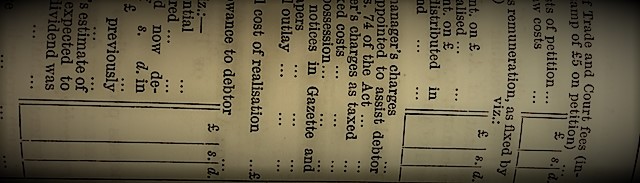
The long history of the report as to affairs in corporate insolvency – the RATA – which started about 1890, has now ended, in 2018.

Registered clubs all over the country get into financial trouble, sometimes requiring the formal insolvency processes under the Corporations Act to secure their position, and

The World Bank has come out with reports[1] that support the Australian government’s attempts to control unlawful phoenix activity, by way of the creation of

An interesting aspect of ASIC’s forthcoming 2018 annual report will be its review of the operation of the changes brought in by the Insolvency Law

Most bankruptcies pay nothing to unsecured creditors. But there are only limited circumstances where a debtor can resist bankruptcy by claiming that they have nothing.
The need for universities to maintain and encourage open debate, particularly in matters of controversy, was recently the subject of a talk for the Academy

Those who are owed “unclaimed moneys” arising from a bankruptcy – for example a creditor whose dividend payment went astray – are assisted by recent

Ten years ago, on 15 September 2008, Professor Rosalind Mason of QUT Brisbane and I gave a paper at the INSOL Academics Group Meeting in

The submission of RITANZ of 7 September 2018 on the proposed Insolvency Practitioners Bill presently before the NZ parliament raises a number of issues of

Section 160 of the Commonwealth Evidence Act 1995 has been amended to change the day when posted letters are presumed to be delivered “in the ordinary

Some selected diary items of interest to Australian readers, and others. September 2018 QUT Law – Dr Paul Omar – Regulation of Insolvency and

While the High Court no doubt gave special leave to appeal in Amerind under the statutory criterion of resolving legal uncertainty, two recent papers suggest

Submissions on proposed major changes to NZ insolvency laws through the Insolvency Practitioners Bill, presently before parliament, closed on 24 August 2018 and the Bill

A ‘employee’s’ claim for payment of unpaid wages by a company in liquidation was rejected by the department under the Fair Entitlements Guarantee Act 2012 (the
The bankruptcy office – the Australian Financial Security Authority – is asking for comment on a revised form of “statement of affairs”, the list of

As the Full Federal Court has just confirmed, an Australian liquidator may conduct a public examination of a prospective or actual defendant to the liquidator’s

The High Court is hearing the special leave application from the Queensland Court of Appeal decision in Linc Energy on Friday 14 September 2018 in
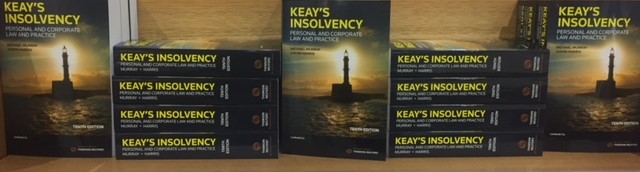
The recent launch of the new 10th edition of Keay’s Insolvency prompted some pointed comments about the current insolvency system and suggestions about law reform

The UK government has announced[1] major insolvency law reforms that would significantly advance the flexibility required for restructuring financially troubled businesses. The reforms would adopt

The Federal Circuit and Family Court of Australia Bill 2018 (FCFC Bill) and the Federal Circuit and Family Court of Australia (Consequential Amendments and Transitional
There is no excerpt because this is a protected post.

A comment in the Victorian Court of Appeal (VCA) decision in Amerind may not have found favour with Justice Gageler at least when the question

While waiting to see if Australia’s parliament decides to introduce a one year period of bankruptcy, down from the current three, a meander through some