
Oversight of deregistered companies
Company deregistrations for failure to return statutory forms and pay fees have increased from nearly five times the number of companies liquidated in 2016 to

Company deregistrations for failure to return statutory forms and pay fees have increased from nearly five times the number of companies liquidated in 2016 to

Reforms to corporate insolvency laws commenced on 1 January 2021 to assist companies with liabilities less than $1 million. These reforms under Part 5.3B Corporations

The Australian Law Reform Commission’s 600 page report on judicial impartiality – Without Fear or Favour: Judicial Impartiality and the Law on Bias (ALRC Report
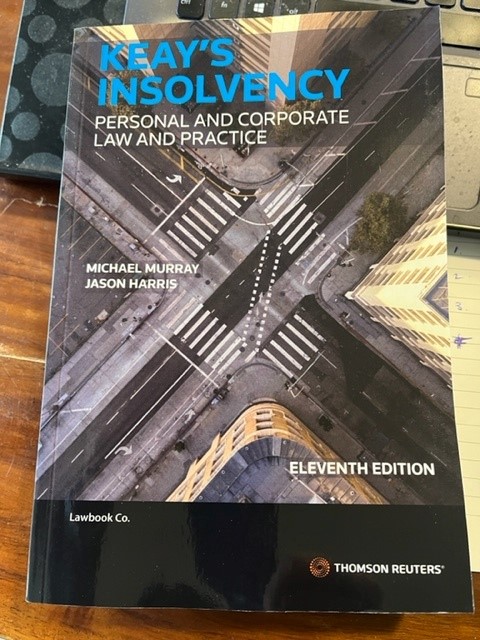
We are pleased to have published the 11th edition of our textbook, Keay’s Insolvency – Personal and Corporate Law and Practice, some four years after

Each of AFSA, ARITA and Financial Counselling Australia has issued a statement calling for better processes for resolution of claims for unpaid debt – Australians

In bills before the new 2022 parliament, our legislative drafters have continued with their consistent approach in relying upon 19th century colonial bankruptcy law to

While Australia is in the midst of some potential change in the law about litigation funding,[1] the New Zealand Law Commission has delivered its long-awaited

International Insolvency Research Symposium.M Murray.RemunerationRevisited July 2022 – final This is a paper I gave at the recent International Insolvency Research Symposium on what I

By a media release ASIC has reported that a disciplinary committee has decided to reprimand a liquidator, Nicholas Crouch, under s 40-55 of Corporations Act
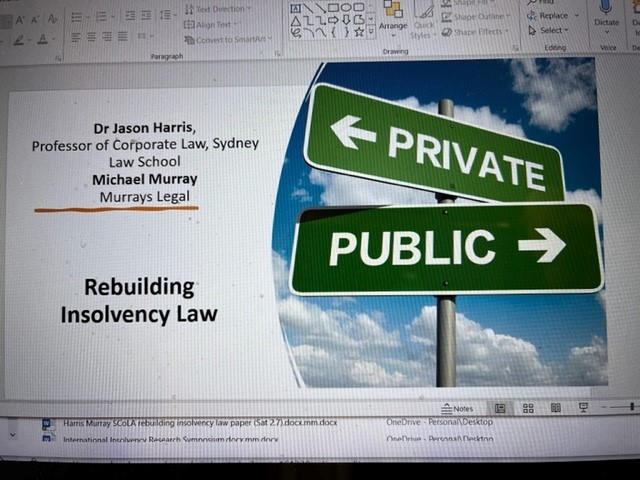
This is the paper given by Professor Jason Harris and myself at the Society of Corporate Law Academics (SCOLA) conference on 4 July 2022, at

“Are you ready to rumble” in the insolvency jungle was the opening question at the Association of Independent Insolvency Practitioners conference at the Hyatt Hotel

The Australian bankruptcy regulator, AFSA, has published what it terms a series of “exemplar behaviour case studies [to] showcase examples of best practice from the

While the UK is reviewing its insolvency practitioner (IP) co-regulation system, Australia’s direct regulation, with minimal but expansive co-regulation, might also come up for review.

A debtor in Australia pays no fee to have themselves made voluntarily bankrupt. If that does not seem odd, then it should be further explained

With the Attorney-General Mr Mark Dreyfus QC in the process of picking up police and other responsibilities from the disbanded Home Affairs and deciding upon
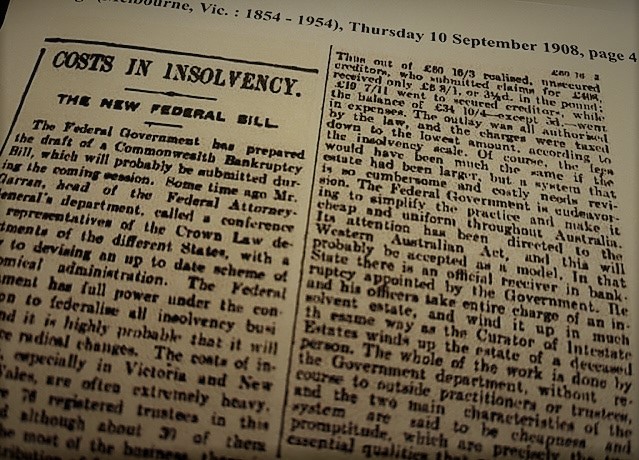
The Age newspaper in Australia has reported on what it describes as the “often extremely heavy” costs in administering insolvencies “which generally come out of

With the UK government rethinking the regulation of its insolvency practitioners (IPs), moving away from co-regulation to a system more like Australia’s direct government regulation
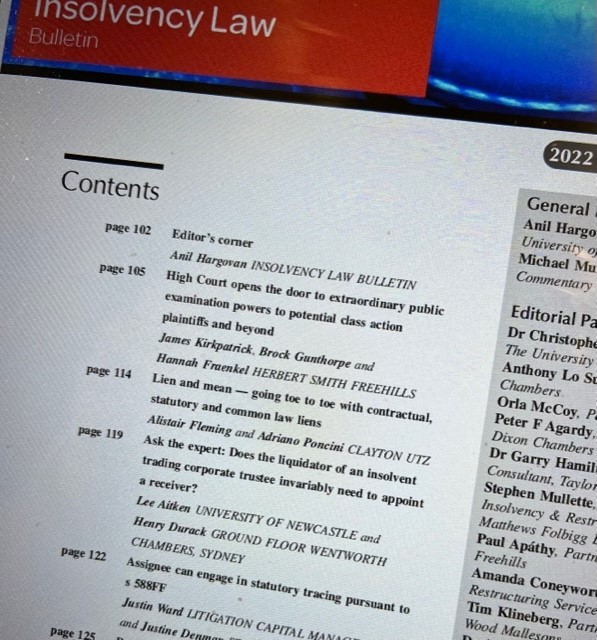
Examinations The latest Insolvency Law Bulletin looks at the High Court’s recent decision in Walton v ACN 004 410 833 Limited (formerly Arrium Ltd) (in

At a seminar in London on 11 May 2022 – National Interest Insolvencies – Should these be for the State to manage? – [ Webinars
The UK government has just enacted the Economic Crime (Transparency and Enforcement) Act 2022 which requires overseas entities holding UK real estate to disclose their

In a recent article on Australian insolvency law reform,[1] Justice Sarah Derrington, as chair of the Australian Law Reform Commission, usefully referred also to cross-border

The High Court of Australia has dismissed the liquidators’ application for special leave to appeal in Australian Sawmilling because the legislation from which it arose

The Fair Entitlements Guarantee [FEG] scheme through the Commonwealth has obtained orders delaying the deregistration of a company to allow a claim to be made

The first and rather glowing report on the operation of the Insolvency (England and Wales) Rules 2016 has been issued by the UK government, showing