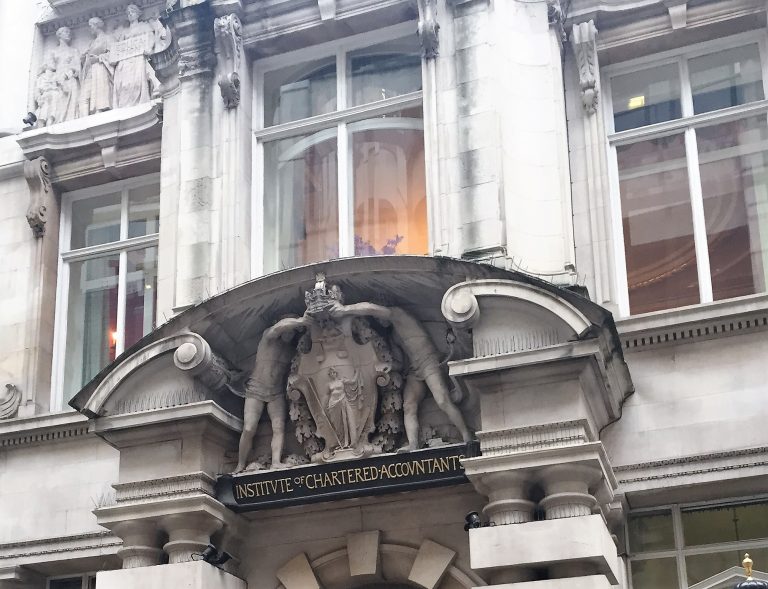
Million pound fines for breach of insolvency standards
The million pound fining of an insolvency firm and its administrators by the English accounting body ICAEW illustrates the differences between the UK’s insolvency co-regulatory

The million pound fining of an insolvency firm and its administrators by the English accounting body ICAEW illustrates the differences between the UK’s insolvency co-regulatory

In the 19th century, where much corporate insolvency law thinking still remains, a distinction was made between court ordered liquidations on the one hand, and

Australia’s ‘safe harbour’ regime under s 588GA is due for review, since September 2019, as to whether it offers the right balance between creditor compensation

” … it might not be seen to be unreasonable [for insolvency practitioners] to avoid expending funds producing affidavits in relation to issues which might

A bankrupt who claimed that noise attributed to her unauthorised rooster was in fact made by her peacock, which was disturbed by someone pulling feathers

A major Aboriginal corporation in Australia’s Norther Territory – the Urapuntja Health Service Aboriginal Corporation – has been placed under the control of “special administrators”

ARITA has offered a 60-page submission to the Ombudsman’s inquiry, which, given the quality of the inquiry, may be rather excessive but is nevertheless useful.

A decision of a tribunal in Australia gives some insight into the insolvency practitioner discipline processes introduced in 2017, which replaced, in corporate insolvency, a

A recent Australian academic thesis reveals an insolvency industry comprising practitioners with low self-identity, lacking in self-confidence and with a limited outlook. The thesis research

New insolvency practitioner codes have issued in Australia, with the UK and NZ perhaps not far behind. It remains to see whether the codes are

The Australian Small Business and Family Enterprise Ombudsman has written a newspaper article about the ‘Insolvency Practices Inquiry’ in the context of the impact of

A court has refused parties’ request to retrospectively make an order for costs to avoid the consequences of a time limitation in bankruptcy. An order

While the ASBFE Ombudsman, ARITA and others are looking at insolvency law reform, including for SMEs, they will no doubt consider some root and branch

A number of academics, including myself, made a submission to the Data Commissioner’s Data Sharing and Release Legislative Reforms Discussion Paper in late 2019. One

” … the issue of proportionality between the amount of indebtedness and the deployment of an application to wind up a debtor company is one

As Australia is about the review the first two years of operation of its 2017 safe harbour reforms,[1] New Zealand is looking at introducing the

As to which, readers will be aware that “[t]he beginning of a day is nothing but the end of the day before, and the end

There is a current focus on whistleblowing as being one means whereby unlawfulness can be controlled. But what can be a voluntary and sometimes difficult

While a trustee was ready to continue the bankrupt’s litigation claim, he was not willing to use the bankrupt’s litigation funder with its premium of

A deed of company arrangement (DOCA) was set aside despite 7 out of 8 creditors supporting it, and despite it offering more to creditors than

The Australian Academy of Law awards annual essay and other prizes. On 7 December 2019, the essay prize of $10,000 was awarded to Dr Ellen

Earlier in December 2019, LLM candidate and graduate lawyer Samantha Pacchiarotta and final year law student Cassandra Heaslip attended Insolvency Working Group V’s 56th session

Public consultation in New Zealand is now open on a discussion paper on the minimum standards and standard conditions for the accreditation of professional bodies[1]

Among several grounds for setting aside a composition between a bankrupt and his creditors under the Bankruptcy Act was ‘equitable fraud’. It had emerged in