
New Zealand’s $1 insolvency practitioner regulation levy

The new New Zealand insolvency practitioner regulation regime, commencing on 1 September 2020, will be funded in part by a $1 fee on all company filings, a policy reason being that all companies will benefit from the new regime whether as creditors or when they require insolvency services themselves. The NZ Companies Office reports that […]
Bankrupt for life?

An Australian personal bankruptcy lasts for a minimum of 3 years in Australia – whether it is an overly committed consumer or an economically impacted trader; and it can be extended up to 8 years. And in some cases, a person’s bankruptcy can last for many years, until their death and beyond. There are around […]
Can a debtor resist a bankruptcy arising from COVID-19?

So far the courts in Australia have not had to deal with many creditors’ bankruptcy petitions against debtors in the current COVID-19 environment. What with the monetary threshold for a creditor to petition for bankruptcy now being $20,000, and response times for debtors to comply extended to 6 months, the bulk of petitions cannot proceed. […]
Australian SME insolvencies – the ATO as the solution?

While the government is no doubt considering a range of options to allow the insolvency system to cope with what is predicted to be a very large number of small to medium enterprise (SME) insolvencies, it has one option that was put in place a short time ago, now needing only a few tweaks. The […]
The potential for conflicts of interest in professional co-regulation

Referrals to a disciplinary committee of two senior insolvency practitioners with connections prompt my further explanations of Australia’s insolvency practitioner regulation system and raise issues about potential conflicts that can arise in any co-regulatory arrangement. As much as is on the record, it is that two liquidators are subject to a 10 July 2020 […]
New Zealand’s bankruptcy monopoly – an MP’s parting comments

The New Zealand Official Assignee administers all personal insolvencies; it shares the administration of corporate insolvencies with the private sector. A Labour member of the NZ parliament, Mr Raymond Huo, who is retiring at the forthcoming election, had attempted to change this ‘statutory monopoly’ in personal insolvency by way of a private member’s bill. In […]
Extension of insolvent trading concessions – flake news?

Someone government person called Andrew is saying that the insolvent trading protections for directors will be extended beyond 25 September 2020? https://www.skynews.com.au/details/_6178269074001 Flake news? Is the Australian government around to advise? Incapacity of our laws Assuming for the moment that this is is the case, the government may be conceding that the capacity of the […]
Income of a bankrupt – “even accepting that chattels might … be received as income, a ship is a very different proposition”.
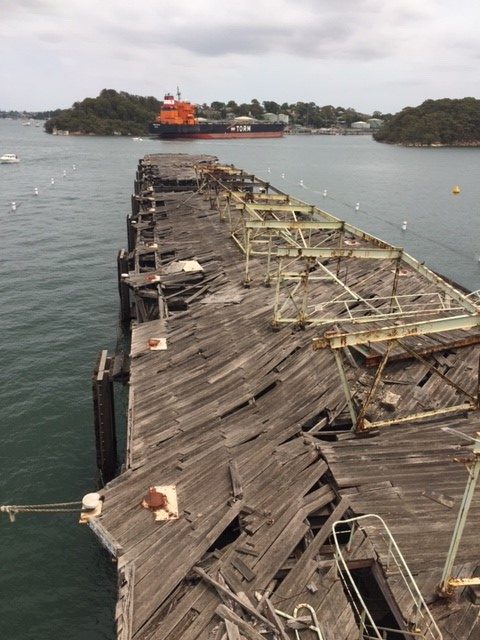
An unlikely case about the salvage of a 120 year old wooden ship – the Defender – has found its way into bankruptcy law, with the purported owner of the ship, now bankrupt, claiming that the ship he purchased should be characterised as ‘income’ and it should therefore be his to keep. While property of […]
Funding of insolvency claims – the PJC inquiry: revised

A submission by Adelaide academics in relation to insolvency litigation funding came before the Parliamentary Joint Committee on 24 July, well presented by Professor Lombard on behalf of the submission of herself and Professor Christopher Symes. As their submission discussed, insolvency does raise particular issues beyond pure financial interests, including as I earlier explained, and […]
Australian bankruptcies – falling numbers continue into the new financial year

The dramatic annual fall in personal insolvencies in Australia to 30 June 2020 has continued with the second half of July 2020 showing yet a further drop to 508 from 587 in the first half of the month in the number of persons entering some personal insolvency arrangement under the Bankruptcy Act. 508 compares with […]
Australian bankruptcies fall 42% over the ‘virus’ quarter

Australian personal insolvencies in 2019-2020 have continued to fall, quite dramatically, of over 23% on last year, and over 35% on the June 2019 quarter. 2019-2020 In 2019-2020 there were: 12,450 bankruptcies, their lowest annual level since 1989–90 and an 18.8% fall from last year. Those in South Australia and Tasmania reached their lowest annual […]
Cross-border proof of an Australian bankruptcy

A certificate of appointment under Bankruptcy Regulation 8.02 in relation to a voluntary bankruptcy should generally be sufficient to support a trustee’s proposed application overseas for recognition of their Australian bankruptcy under Article 15 and related articles of the UNCITRAL Model Law on Cross-Border Insolvency. Nevertheless, in the voluntary Australian bankruptcy of Mr Moltoni, the […]
A bankrupt taxpayer – “It is no answer … to say that the Commissioner can be trusted”.

The Federal Court has correctly held that a person who is bankrupt has no standing to challenge a tax assessment of the Commissioner: Hanna v Deputy Commissioner of Taxation [2020] FCA 1021. The bankrupt was held not to be a “person aggrieved” for the purposes of the Administrative Decisions (Judicial Review) Act 1977 (Cth). Any right […]
Ombudsman’s company insolvency recommendations

The ASBFEO (Ombudsman) has asked that the government fix what is said to be a broken corporate insolvency system in Australia before the apocryphal ‘insolvency tsunami’ hits. A number of recommendations are made following its insolvency inquiry, based on stated “findings”. These are confined to businesses operating through a company, and not the large proportion […]
Company deregistration – government’s fast track response to assetless companies

Fast-tracking insolvent assetless companies through a default de-registration process was introduced, in effect, by the Insolvency Law Reform Act 2016 (ILRA). In removing the arcane obligation of an official liquidator to work unfunded, the government said that it would be up to creditors to fund an assetless liquidation, or, if not, then “this may mean a […]
Protected: Australian Insolvency Losers System (in vol admin) – commercial in confidence

There is no excerpt because this is a protected post.
Down and down – Australian personal insolvency numbers

The first fortnight of July (29 June to 12 July) saw a drop down from 611 to 587 of people in Australia entering into some type of personal insolvency, although this was an increase from 553 of the fortnight before last. But this compares with the average of 844 per fortnight between 1 July 2019 […]
Mainzeal’s NZ$36m reckless trading appeal pending; bankruptcy of director deferred

Liquidators of Mainzeal with a NZ$36m judgment for reckless trading against the company’s directors have failed in an attempt to bankrupt one of the directors only two weeks out from the director’s appeal hearing. Meanwhile, the outcome of the appeal may assist in any review of NZ’s insolvency laws. The New Zealand High Court decision […]
Virtual Panel Series – UNCITRAL Texts and COVID-19 Response and Recovery – MSMEs and access to credit and secured lending

An interest group in Australia, the UNCITRAL Coordination Committee for Australia (UNCCA), has a role in monitoring and attending UNCITRAL[1] sessions including those of UNCITRAL’s Working Group V – Insolvency. Its representatives attended part of an on-line session on the difficulties caused for MSMEs worldwide by the COVID-19 crisis. The MSME session, and access to […]
Liquidators’ remuneration in Halifax referred to a referee

Going back some years, Australia rejected a single insolvency regulator for its personal insolvency practitioners on the one hand, and its corporate insolvency practitioners on the other;[1] 90% of whom are registered as both. Separate regulation was maintained and continues. Even when major harmonising reforms were enacted in 2016, that decision was not revisited. Each […]
Bankruptcy – ‘the Court looks with suspicion on consent judgments and default judgments’

It is not often that a bankruptcy court will go behind the judgment upon which the creditor’s petition against the debtor is based. But there is a fundamental position taken that this can be done if there is some doubt as to whether there was in fact a debt due by the debtor to the […]
“Insolvency business is booming …” in the UK

Adrian Duncan was an insolvency practitioner in Australia years ago.[1] He now practises in the UK and it seems is doing quite well given what is said to be “shaping up to be the biggest amount of insolvency work the United Kingdom has ever seen”; with comparisons made with Australia. Judgment debt But judgment was […]
How much to regulate an Australian liquidator? a NZ liquidator?

While ASIC is currently taking submissions on its proposed funding charges for the regulation of Australian liquidators, and other groups – see Cost recovery implementation statement – 2019-20, CRIS – a similar process is happening in New Zealand in relation to the commencement of the new co-regulatory regime for its insolvency practitioners on 1 September […]
Managing Australian and New Zealand insolvency practitioners

CAANZ took a worthy leap some years ago in bringing the Australian and New Zealand accounting professions together. Given that an “accountant” has a limited legal basis or status, at least in Australia, the differences in the laws of the two countries should not be so much of an issue. But where accountants assume a […]